
“Harmony Is the Greatest Need of Our Time”: Dr. Khwaja Iftikhar AHMED at IFHFI–NCPUL Seminar at New Delhi
“Come What May, Unity in Diversity Must Stay”: Justice Iqbal Ahmed Ansari at National Interfaith Seminar in Delhi
Inter Faith Harmony Foundation of India Organised in collaboration with NCPUL on Interfaith Ethics in New Delhi

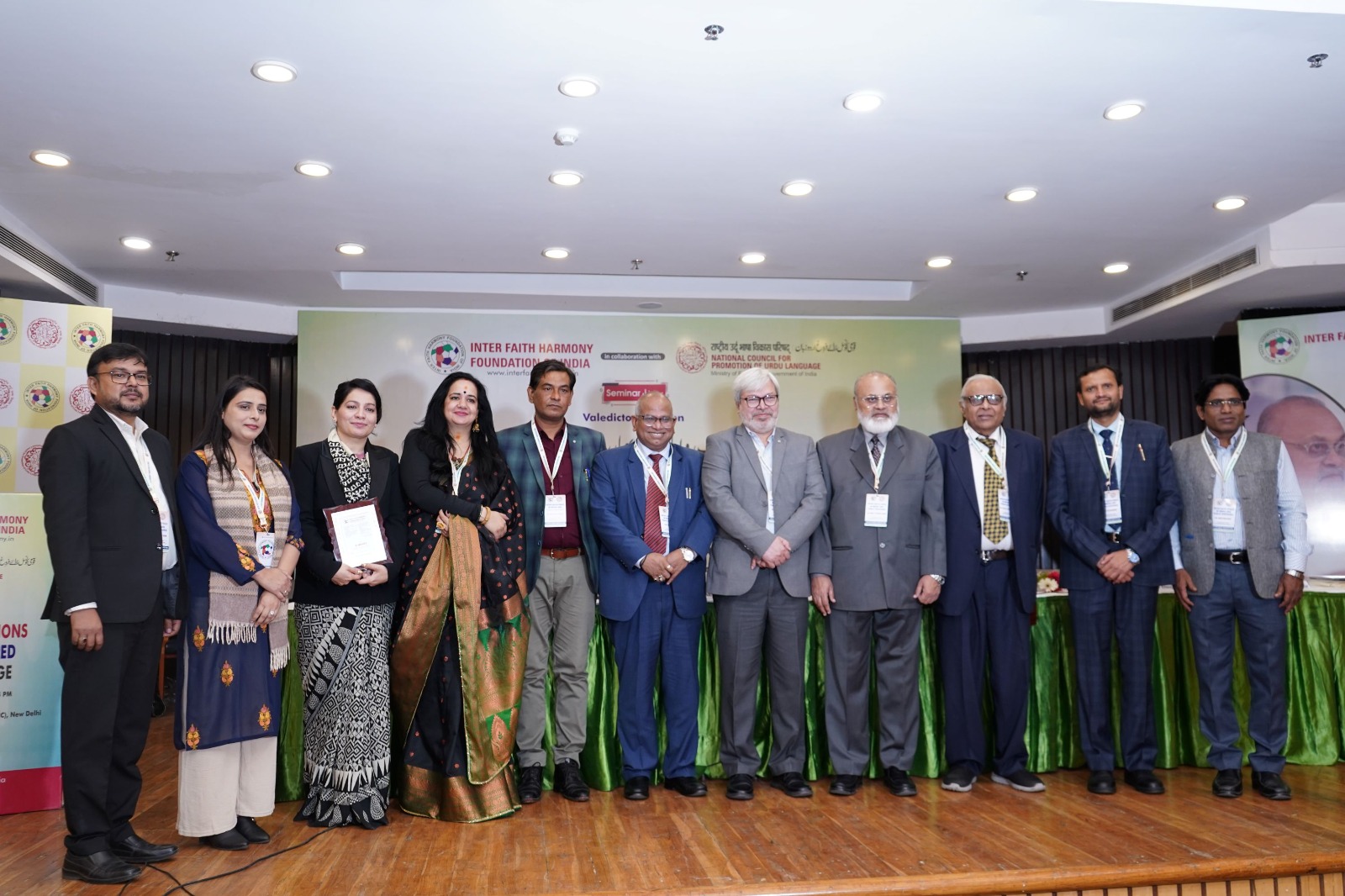
“Harmony Is the Greatest Need of Our Time”: Dr. Khwaja Iftikhar at IFHFI–NCPUL Seminar at New Delhi
New Delhi, February 18: The Inter Faith Harmony Foundation of India (IFHFI) New Delhi in collaboration with the National Council for Promotion of Urdu Language (NCPUL), Ministry of Education, Government of India, organised a National Seminar on “Interfaith Ethics in Media, and Public Discourse” at the India International Centre, New Delhi.
The day-long seminar, held at the India international centre, comprised three sessions and witnessed the participation of eminent scholars, vice chancellors, media professionals, social activists, policy experts, university faculty members, research scholars and students from across the country.
Delivering his Keynote address, Dr. Khwaja Iftikhar Ahmed, Founder and Director of the Interfaith Harmony Foundation of India, said that harmony remains the greatest need of the present era. He declared that “come what may, unity in diversity must stay,” asserting that India must continue to stand as a symbol of civilisational unity despite challenges. He remarked that in today’s world, technology, artificial intelligence, and media ratings may dominate discussions, but what truly matters is harmony. He emphasised that society is about shared existence, describing India as a land where diverse beliefs live together “as if cooking in one pot and eating together.” Referring to the civilisational link between Manu and Adam, he argued that India belongs to humanity rather than to any single religion. He maintained that no community in India is foreign and described the country’s shared heritage as a living example of cultural blending. He said that true achievement lies in humility, tolerance, rationality, and respect for others, urging youth to cultivate honour and elders to show compassion.
Introductory Remarks Director of NCPUL Dr. Md Shams Equbal observed that the theme of interfaith harmony is closely linked not only to language and literature but also to social discourse. He referred to celebrated Urdu novels, noting how they reflect India’s composite culture. He further remarked that Urdu poetry across generations represents the spirit of shared civilisation.
Chief Guest Shri Vijay Goel stressed that religion is rooted in education and ethics. He urged people to follow the positive teachings of elders and emphasised that religion teaches truth and non-violence, not conflict.
Justice Iqbal Ahmed Ansari observed that while we are human beings by identity, we must strive to become better human beings in conduct. He emphasised that the core objective of interfaith harmony is to ensure that no one harms another. Given India’s multilingual and multi-religious character, he stressed the urgent need for sustained interfaith dialogue.
Editor of The Emerging World Dr. Dinesh Dubey noted that religion existed even before constitutional systems and contributed significantly to the development of civilisation. He underlined that love and spirituality are central to human life across faith traditions.
Editor of Inquilab M. Wadood Sajid explained the Islamic perspective on interfaith harmony and elaborated on the concept of humanity in Islam. Mohammad Wajihuddin reflected on media responsibilities and the role of ethical journalism in fostering social balance.
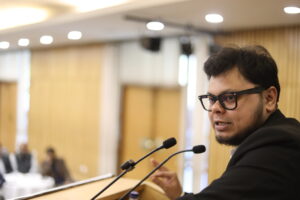
The concluding session, titled “Interfaith Traditions and India’s Shared Cultural Heritage,” was presided over by Prof. Khwaja Abdul Muntaqim. The Chief Guest was Prof. Mohammad Afshar Alam, Vice Chancellor, Jamia Hamdard and Prof Md Qutbuddin Chairman of Arabic Department of JNU. The session was moderated by Dr. Aamna Mirza.
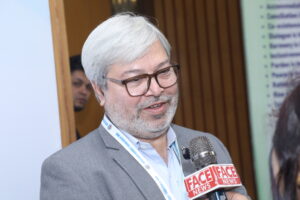
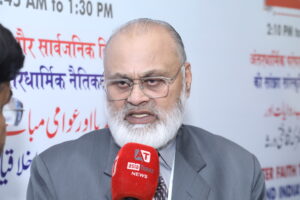
Dr Amna Mirza , the moderator of the session invoked Rabindranath Tagore’s view that the highest education harmonises life with existence, and Swami Vivekananda’s emphasis on character-building and mental strength. She stressed that as India moves toward a developed future, interfaith traditions and shared heritage will play an important role in shaping society.
VC of Jamia Hamdard Prof. M Afshar Alam described India as a deeply spiritual land with a rich composite heritage strengthened by Sufi, Rishi, and Bhakti traditions. He called for actively promoting mutual respect and harmony in society. Prof. Khwaja Abdul Muntaqim stated that India has always been a cradle of composite culture where diversity coexists with mutual respect.
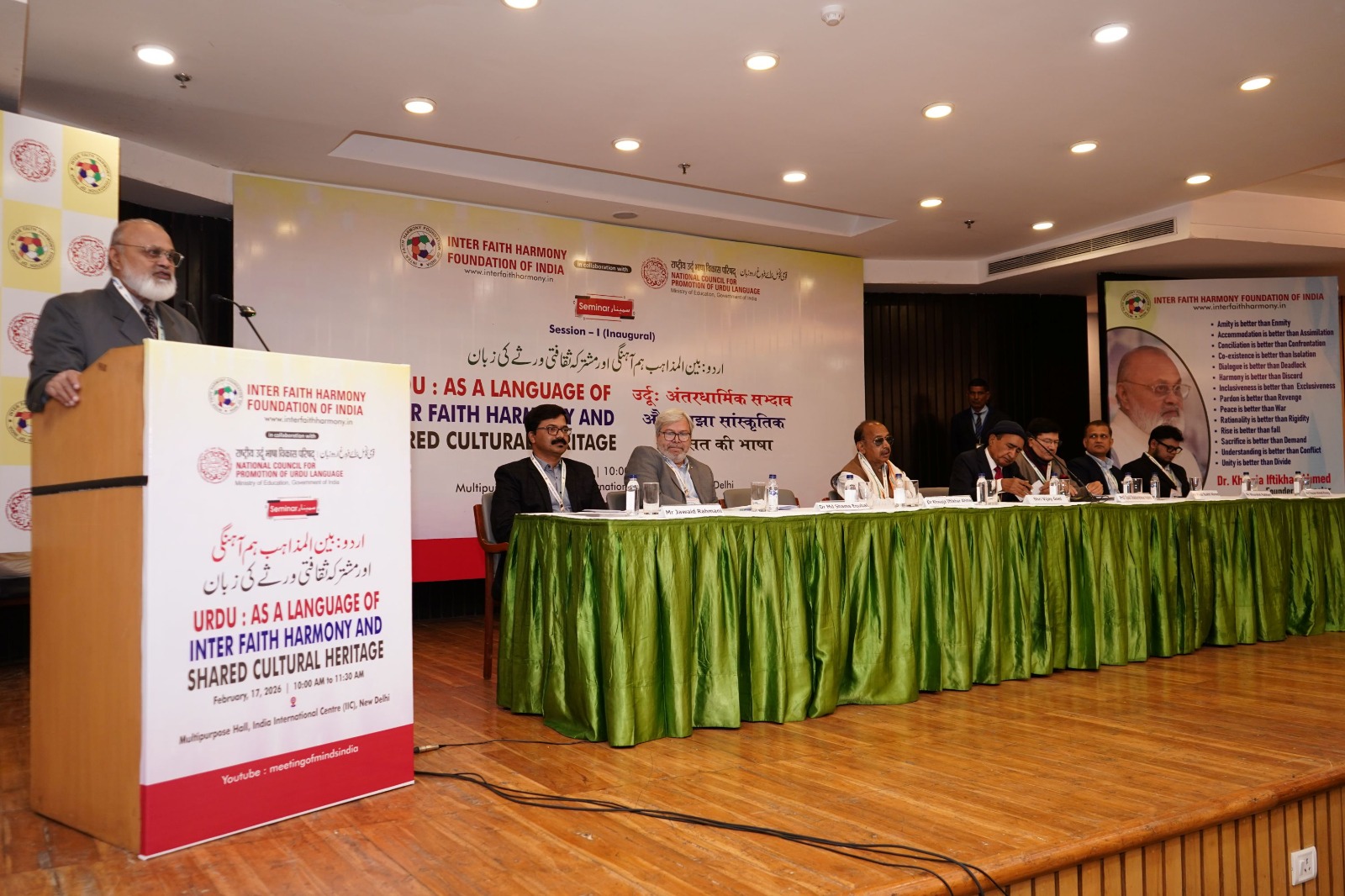
Dr. Khwaja Iftikhar Ahmed highlighted the objectives of the seminar and emphasised that Indian languages carry a refined civilisational ethos. He described Urdu as a language of shared heritage that plays a vital role in promoting interfaith harmony and patriotism. He stated that India remains a unique nation where all religions enjoy freedom and dignity.
CEO of IFHFI Fainan Ahmed Khwaja reflected on India’s moral foundation. Citing an interview of former Prime Minister Indira Gandhi following the 1971 war, he noted that India chose peace over domination, demonstrating that the nation’s real strength lies not in military power but in moral character.
Prof. Zakir Khan Zakir, a social activist from Mumbai, traced the roots of India’s interfaith harmony through history. He described India’s civilisation as shaped by thousands of years of intellectual debate and religious plurality.
TOI’s Mohammed Wajihuddin spoke about practical initiatives to promote interfaith harmony and stressed the need to educate younger generations about India’s shared traditions and their long-term benefits.
In his presidential address, Prof. Qazi Obaid-ur-Rehman Hashmi stated that Urdu has long served as a lingua franca contributing to composite culture. He noted that the Indian film industry and Sufi traditions have significantly benefited from the language’s inclusive character.
The success of the seminar was made possible through the collective efforts and active participation of distinguished academicians, jurists, media professionals, and social leaders from across the country. Among those who contributed significantly to the programme were Prof Divya Tanwar, Dr Aayushi Ketkar as Moderator of 2nd Session, Dr Kaleem Ullah, Dr Daulat Ram, Dr Deeba, Monalisa Lenka, Manisha, Nadeem Waris Khan, Anil Maheshwari, Mushtaq Ansari, Sayeed Ahmed, Jawaid Rahmani Moderate of 1st Session, Asif Husain, Iqtedar Saheb, Adv Anisul Haque.
The seminar concluded with a collective resolve to carry the message of interfaith harmony and ethical coexistence to every corner of the country.
