
Bengal’s Political Shift and the Rise of a New National Mood – Prof Jasim Mohammad
From Political Margins to Historic Victory in West Bengal

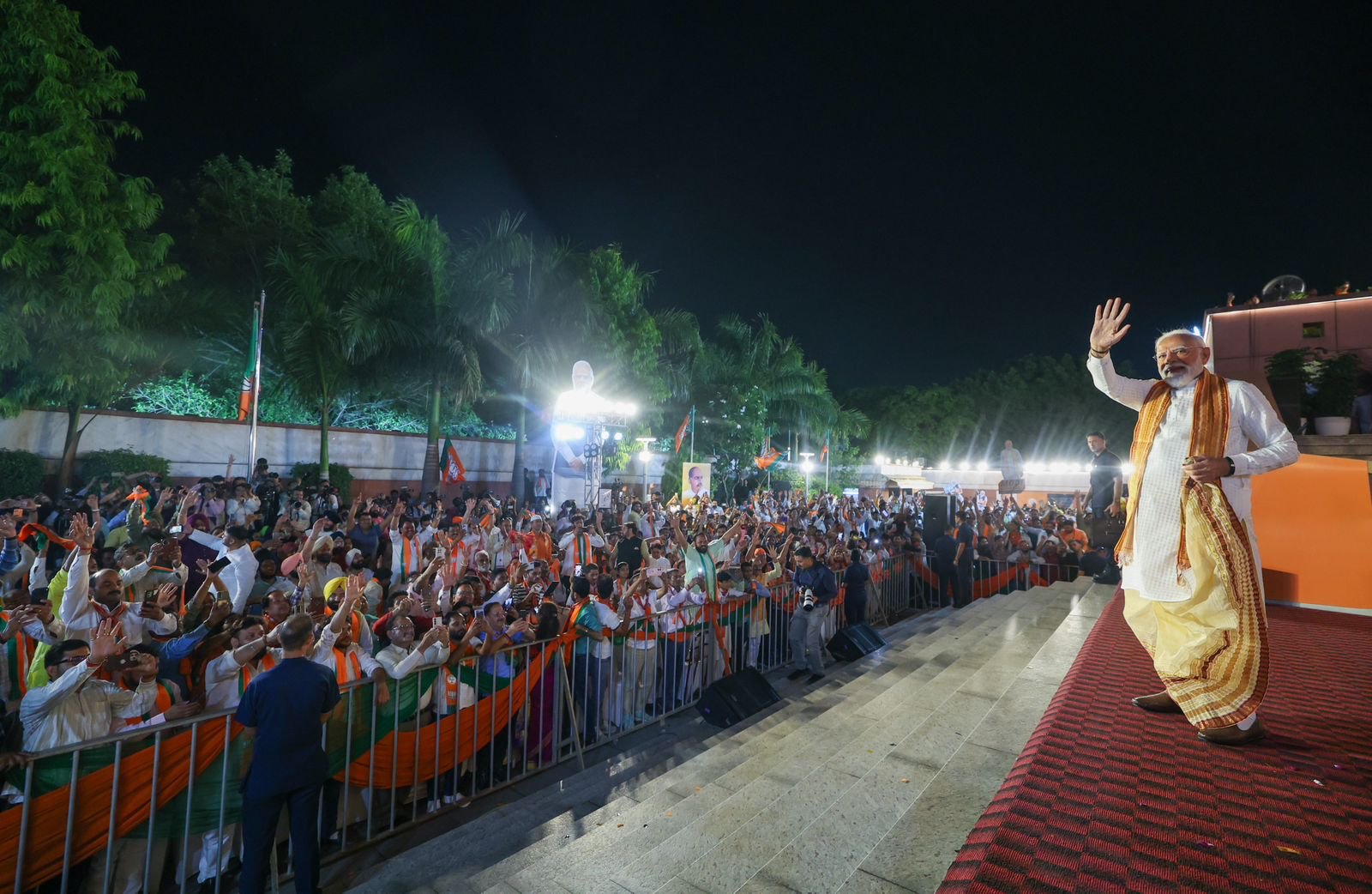
There was a time when people in political circles used to say that West Bengal could never accept the BJP in a serious way. Bengal had its own political culture, its own emotional temperament, and its own history of regional dominance. For years, the BJP remained on the margins while powerful regional forces controlled the political narrative of the state. But politics has a strange habit of surprising even the most experienced observers. The recent victory of the BJP in Bengal is a silent shift that had been building inside society for years and finally found expression through the ballot box.
For many ordinary BJP workers, this victory feels deeply personal. Thousands of workers spent years traveling through villages, small towns, tea stalls, market areas, and remote localities trying to build support in a political environment that was often hostile to them. Many faced social pressure and political resistance, yet they continued believing that one day Bengal would politically open its doors to the BJP. That is why the celebrations after the victory carried more emotion than arrogance. It felt less like a routine election win and more like the completion of a long and exhausting journey.
Narendra Modi remains the central force behind this political transformation. His connection with people cannot simply be explained through speeches or campaign strategies. Many Indians see a reflection of their own struggles in his story. A man who rose from a modest background to become Prime Minister naturally creates emotional identification among ordinary citizens. In a country where millions still fight daily battles for dignity and opportunity, such a story matters. It creates trust, and politics ultimately runs on trust more than anything else.
What makes Modi different from many traditional politicians is the sense of energy he brings into public life. Even his critics often admit that he works with unusual intensity. Whether he is speaking about infrastructure, technology, national security, or India’s place in the world, he communicates with conviction. Supporters feel that under his leadership India has become more confident internationally and more ambitious domestically. People may debate policies endlessly, but confidence itself is politically powerful, and Modi has successfully made confidence part of his political identity.
The Bengal result also reflects the mood of a younger India. The new generation is less interested in old ideological battles and more focused on opportunities. Young people today want employment, business opportunities, digital growth, modern roads, better connectivity, and a stable future. They are impatient with political stagnation. In many ways, the BJP managed to present itself as the party of movement and expansion while projecting regional rivals as trapped in old political habits. That contrast appears to have influenced many first-time voters.
Women too have emerged as one of the strongest pillars of support for Modi across India. In countless households, women speak not in complicated political language but in practical terms. They talk about gas cylinders reaching homes, toilets being constructed, bank accounts being opened, and direct benefits reaching families. These are everyday issues, but everyday issues shape public opinion more deeply than television debates. Many women voters feel that Modi understands the difficulties faced inside ordinary homes, and that emotional perception carries enormous electoral weight.
Another important aspect behind this victory is organizational discipline. Elections are not won only through speeches from big stages. They are won through patient groundwork. The BJP invested years in strengthening local leadership, creating booth-level networks, training workers, and maintaining constant outreach. Amit Shah played a crucial role in this process. He approached Bengal not as a symbolic political battle but as a mission requiring patience and strategy. Slowly, the BJP transformed itself from an outsider party into a powerful grassroots force.
What happened in Bengal also carries a national political message. For decades, Indian politics was largely divided between regional strongholds and national parties. Certain states were considered politically untouchable for outside forces. But the BJP’s expansion into Bengal shows that Indian politics is entering a different phase. Voters are becoming more fluid in their choices. Regional loyalties still matter, but national leadership now matters equally, sometimes even more.
The discussion around One Nation, One Election becomes especially relevant at a time like this. India is almost always in election mode. One state votes today, another votes after a few months, and another enters campaign season immediately afterward. Political parties remain permanently busy with rallies and strategies. Governments too become trapped in constant political calculations. In such a situation, long-term governance often suffers because elections never truly end.
Holding simultaneous elections could bring a sense of administrative stability. Governments would receive proper time to focus on development instead of shifting constantly between governance and campaigning. Policies could be implemented with more continuity. Officials, teachers, police forces, and administrative machinery would not repeatedly get diverted into election duties every few months. The country’s energy could move more toward governance and less toward nonstop political mobilization.
The financial cost of repeated elections is another serious concern. Enormous public and private resources are spent during every election cycle. Political parties spend heavily, governments mobilize huge administrative systems, and public life gets disrupted repeatedly. One Nation, One Election has the potential to reduce these burdens significantly. The money and energy saved could be redirected toward areas that genuinely affect citizens’ lives such as healthcare, education, employment, and infrastructure.
There is also the issue of social harmony. Continuous elections often mean continuous political tension. Every few months, public discourse becomes aggressive and divisive. Television debates become louder, political accusations intensify, and communities are pushed into confrontation. If elections are conducted together once in five years, the country may experience longer periods focused on governance, economic growth, and social stability rather than endless political battles.
Supporters of Narendra Modi believe that he thinks beyond short-term politics. Whether one looks at infrastructure expansion, digital governance, direct benefit transfers, or administrative reforms, his leadership style appears focused on large-scale structural changes. In that sense, One Nation, One Election fits naturally into his broader political vision of making governance faster, more efficient, and less burdened by constant electoral interruptions.
Of course, democracy will always include disagreement, criticism, and political competition. That is healthy for the country. But even many political opponents privately acknowledge the BJP’s remarkable organizational strength and Modi’s exceptional ability to communicate directly with ordinary citizens. Winning Bengal was not an accidental moment. It was the result of years of political persistence, emotional messaging, and strategic planning carried out with discipline.
For BJP workers and supporters, the Bengal victory felt deeply emotional because many of them had spent years working quietly without knowing whether they would ever see political success in the state. Some traveled from village to village, organized meetings with very few people attending, faced criticism, and still continued believing that one day the political atmosphere in Bengal would change. That is why, when the results finally came, the celebrations were filled with genuine emotion. For many workers, it was not just a party winning an election; it felt like years of hard work, patience, and commitment had finally been acknowledged by the people.
This victory also says something important about the mood of today’s India. Across the country, many people now look for leadership that appears decisive, energetic, and focused on development. Voters increasingly want better roads, stronger infrastructure, investment, jobs, stability, and a sense that the country is moving forward with confidence. For a large number of Indians, Narendra Modi represents that sense of movement and ambition. His supporters believe he brought a new confidence into public life and made ordinary people feel that India can aim bigger, think bigger, and stand stronger on the global stage.
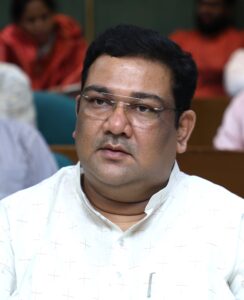
(Author is Professor and Chairman of Centre for NaMo Studies (CNMS). Email: namostudies@gmail.com, profjasimmd@gmail.com )
