
Aligarh Public School Unnecessarily Demonised
The Truth Behind Prof Zakia Siddiqi’s Role in the APS Controversy
– Firoz Bakht Ahmed


Allegations Against Prof. Zakia Siddiqi Hold No Water
Prof Zakia Athar Siddiqi’s name has been pulled into a loathsome controversy that, honestly, seems far louder than the facts actually justify. When you sit down and look at what really happened, the picture will be clear. Take the issue of the allegation of ₹4.8 crore transfer. The way it has been described makes it sound like money disappeared, or was siphoned off somewhere. But that is farcical. The amount was moved from one account of the Samiti to another account of the same “APS Shiksha Samiti”. It stayed within the same institution all the time. No outsider, no diversion, no loss. Calling this “fraud” appears like stretching the meaning of the word beyond recognition. Fraud usually involves intent, deception, and damage. Here, none of that is visible. At most, you’re looking at a procedural lapse — something administrative, not criminal.
What matters more is how Prof. Siddiqi handled the situation when it came to her notice. She didn’t ignore it or try to downplay it. Instead, she did what any responsible administrator should do — she ordered an inquiry. That step alone tells you a lot about her approach. And this wasn’t a symbolic inquiry just to tick a box. It actually led somewhere. The committee examined the issue, identified the lapse, and action was taken against the person responsible. The accountant was suspended and later resigned. That is exactly how accountability is supposed to work.
Another important point, which is often being conveniently skipped, is that the findings were formally communicated to the Registrar. That doesn’t look like someone trying to hide things. If anything, it shows the opposite — that the matter was put on record and handled transparently. So when the same issue is now being presented as if it is some ongoing scandal, it feels misleading. The matter had already been looked into, dealt with, and closed. Reopening it without mentioning that process gives a very incomplete picture.
On the governance side, the situation is even clearer. The existence of the “APS Shiksha Samiti” is not some irregular arrangement. It is actually required under CBSE rules. Schools affiliated with CBSE cannot be directly run by a university; they need an independent management structure. So, supporting the Samiti is not defiance — it is compliance. Prof Zakia Siddiqi, in that sense, was simply aligning the institution with what the law requires. That’s a crucial distinction that often gets lost in the noise.
The claim that the Samiti was formed without the knowledge of the University is also difficult to accept at face value. When the then Vice Chancellor himself was the founder President, it becomes hard to argue that the University didn’t know what was happening. This isn’t a minor detail. It shows that the Samiti was not created quietly or without approval. It had backing at the highest-level right from the beginning. Prof. Siddiqi was continuing within that established framework, not creating something new or questionable.
Then there is the matter of records. For years, audited accounts have been signed by the Registrar on the Samiti’s letterhead. That kind of consistency doesn’t happen by accident. It reflects awareness and acceptance over a long period. The same goes for the joint operation of bank accounts. Financial authority of that nature requires involvement. It’s not something that can exist without knowledge. These details make the claim of “ignorance” even harder to believe.
On the issue of land, the facts again seem straightforward. The property is Waqf land. The University acts as a caretaker, not as an owner. This is a legal position, not an interpretation. The Samiti, for its part, has been paying rent regularly. The rent has even been revised over time. That indicates a normal, structured relationship — not a dispute over ownership.
What really raises eyebrows, though, are the events of March 30. The reported entry into the premises, the changing of locks, and especially the switching off of CCTV cameras — these are not routine administrative steps.
Disabling surveillance at such a moment naturally creates suspicion. It gives the impression that transparency was not a priority. And that stands in sharp contrast to the earlier handling of the financial issue, where everything went through inquiry and documentation. When you place these two approaches side by side, the difference becomes obvious. On one hand, there is a methodical, process-driven response. On the other, actions that appear abrupt and forceful. It also brings up a larger concern — how narratives are shaped. When certain facts are highlighted and others are left out, the story changes. In this case, leaving out the inquiry and its outcome makes the situation look far more serious than it actually was.
Looking at Prof. Siddiqi’s role overall, there is a clear pattern. She responded to issues, relied on institutional mechanisms, and ensured that matters were formally addressed. That’s what governance is supposed to look like! There is no visible sign of personal gain, nor any indication of deliberate wrongdoing. If anything, her actions suggest caution and responsibility rather than recklessness. At the end of the day, this seems less like a case of misconduct and more like a case of misrepresentation and misconstrued facts. The facts, when taken together, tell a much simpler story — one that doesn’t match the dramatic version being circulated. And once you step back and look at it without the noise, Prof Zakia Athar Siddiqi’s position appears quite reasonable. She comes out clean.
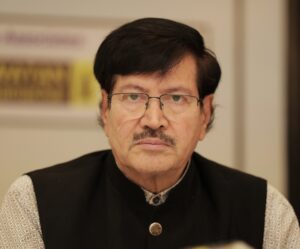
(The author is a former Chancellor MANUU, Hyderabad and grandnephew, Bharat Ratna, Maulana Azad and may be contacted at firozbakhtoffice@gmail.com )
