
“India’s Ancient Philosophical Traditions Can Provide Ethical Direction to Artificial Intelligence”: Prof. Ihtiram Raza
DU’s Dr Amrita Sastry Highlights Ethical and Human-Centric AI During Technical Session at AI Education Summit 2026

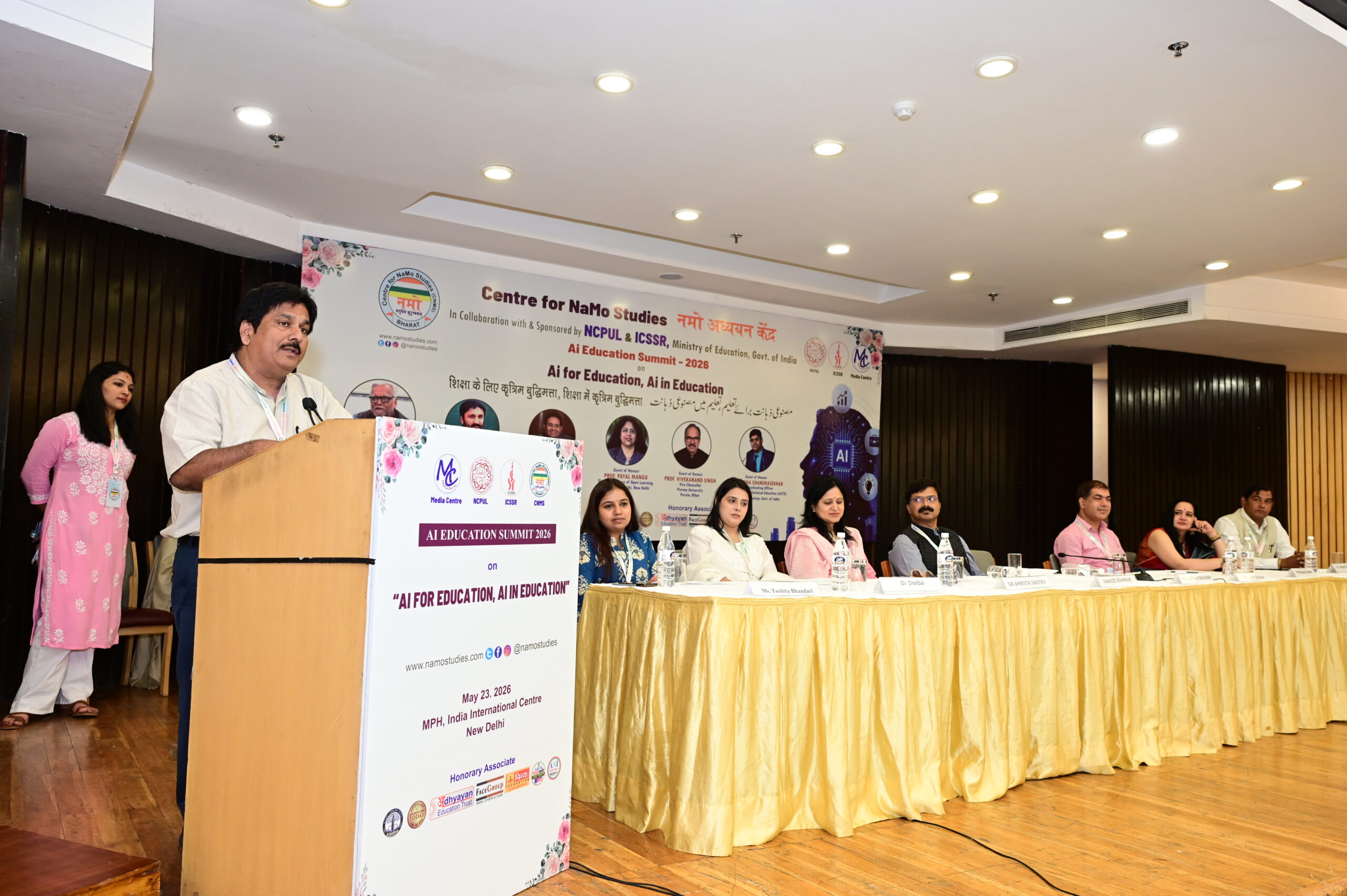
CNMS Technical Session Highlights Ethical AI, Education, and Indian Knowledge Traditions
Centre for NaMo Studies, NCPUL & ICSSR Organise Technical Session on AI, Education and Indian Knowledge Systems
AI Education Summit 2026: Scholars and Researchers Deliberate on Artificial Intelligence and Indian Knowledge Traditions
New Delhi, 26 May 2026: “India’s ancient philosophical traditions and knowledge systems can provide moral and ethical direction to the rapidly evolving field of Artificial Intelligence. Education in the AI era must focus on human consciousness, responsibility, and value-based learning,” said Prof. Ihtiram Raza Khan, Adjunct Professor, Jamia Hamdard who chaired the Technical Session on Artificial Intelligence and Indian Knowledge Systems during the AI Education Summit 2026 organised at India International Centre, New Delhi, by the Centre for NaMo Studies in collaboration with NCPUL and sponsored by ICSSR, Ministry of Education, Government of India.
Addressing the gathering, Prof. Ihtiram Raza Khan emphasised that Artificial Intelligence is transforming every sphere of education, research, communication, and knowledge-sharing. He stated that while AI is creating new opportunities and innovations, it is equally important to ensure that technological advancement remains connected with ethics, humanity, and cultural values.
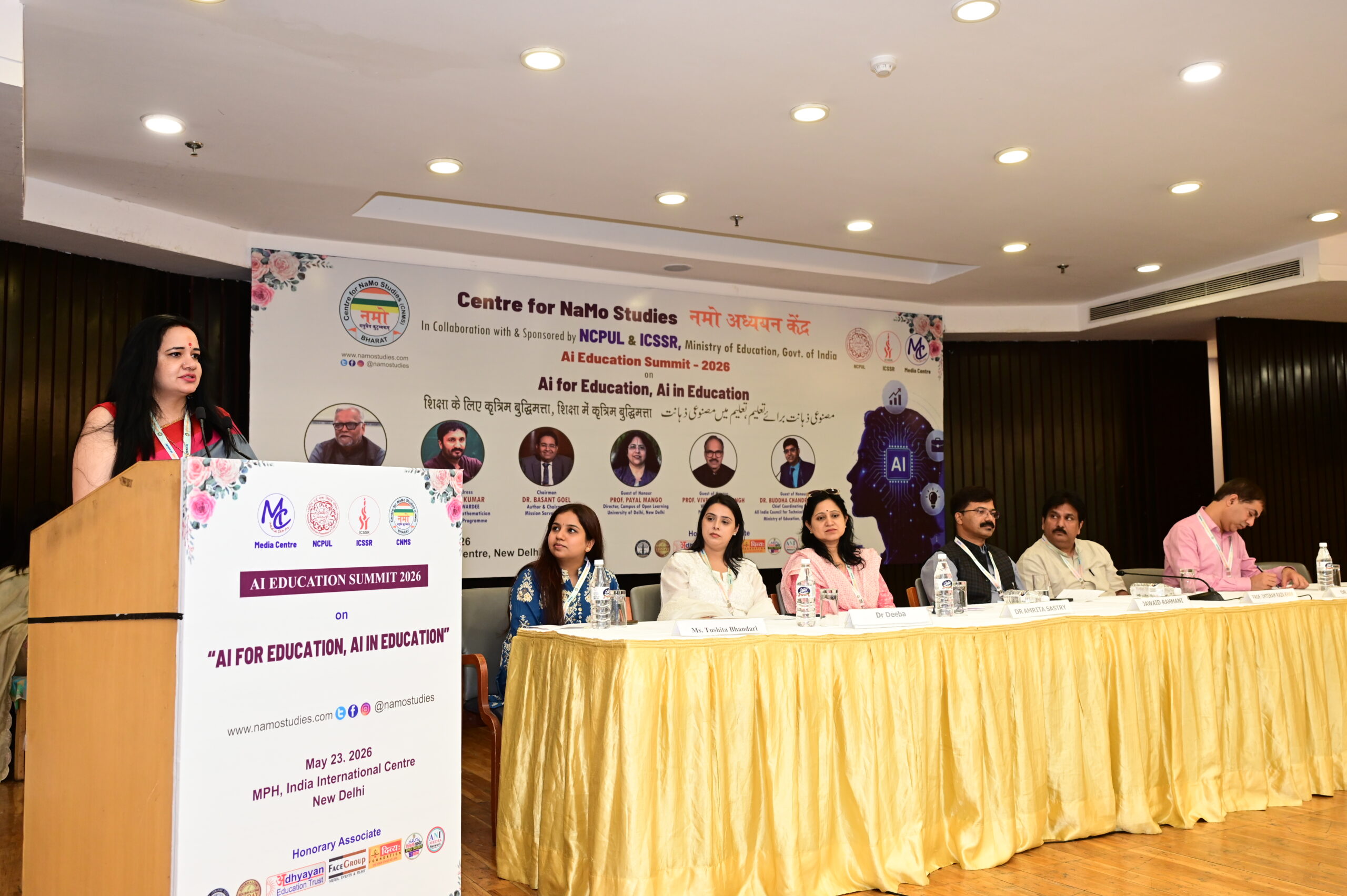
The session was further guided by distinguished Co-Chairs including Dr. Amrita Sastry, Associate Professor, Jesus and Mary College, University of Delhi; Dr. J. P. Singh, Assistant Professor, Department of Sociology, IP College for Women, University of Delhi; and Dr. Aparna Singh, Associate Professor, AITM, and Post-Doctoral Scholar at the Institute of Management Studies (IM), BHU, Varanasi.
During the paper presentation segment, Prof. Divya Rashmi Tanwar presented a research paper titled “Integrating Ancient Indian Philosophical Principles and Epics into AI Education: Fostering Ethical Consciousness and Holistic Learning through Karma Yoga, Dharma, and Narrative Pedagogy.” The paper focused on combining Indian philosophical thought with AI education to promote ethical awareness and holistic learning.
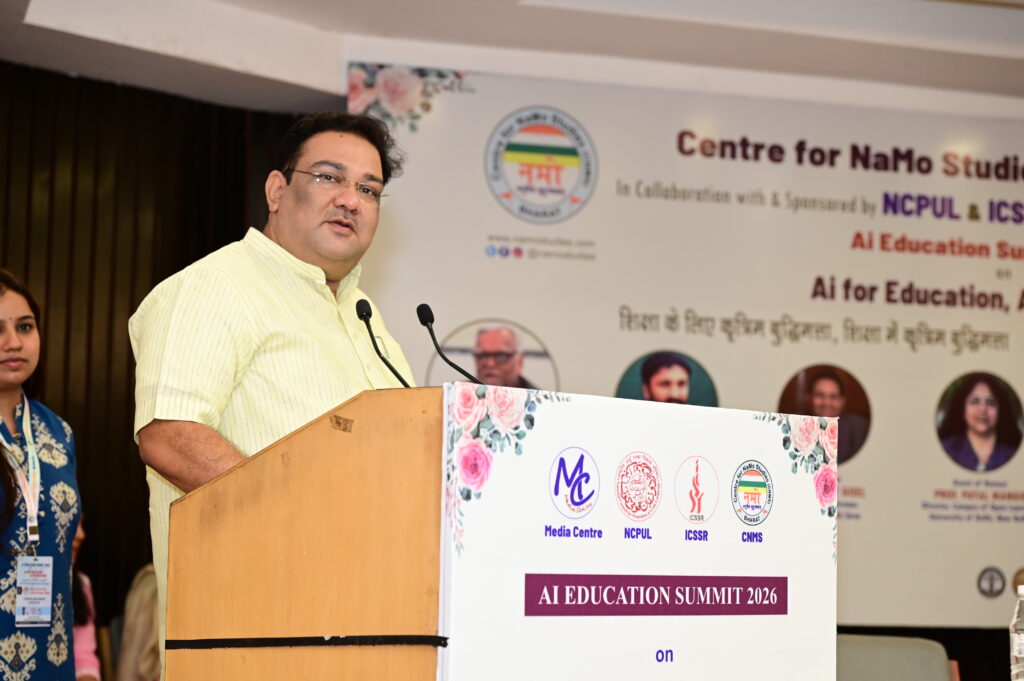
Another paper presentation was delivered by Shahi Raza Khan and Vanshit Mehta on the topic “Media Convergence and Indian Knowledge System: Transforming Traditional Wisdom into Digital Experiences.” The presenters discussed the role of Artificial Intelligence and digital media in preserving and promoting traditional Indian wisdom through modern technological platforms.
Prof. Jasim Mohammad, Chairman of the Centre for NaMo Studies (CNMS), stated that the purpose of organising such academic and intellectual programmes is to encourage meaningful dialogue on Artificial Intelligence, create awareness about emerging technologies, and promote responsible and ethical use of AI in society and education. He further stated that the summit aimed to connect technological advancement with Indian knowledge traditions, research, innovation, and value-based learning for the betterment of future generations.
Prof. Jasim Mohammad also appreciated the scholars and researchers who participated in the technical session and submitted research papers on important contemporary themes related to Artificial Intelligence, education, ethics, media convergence, and Indian Knowledge Systems. He remarked that such paper presentations and academic discussions help in developing informed perspectives and contribute towards nation-building through intellectual engagement and research-oriented dialogue.
He further stated that CNMS will continue to organise more such national and international academic programmes, seminars, summits, and technical sessions in the future to promote awareness, research, innovation, and meaningful discussions on Artificial Intelligence and other contemporary issues related to education, society, media, and nation-building.
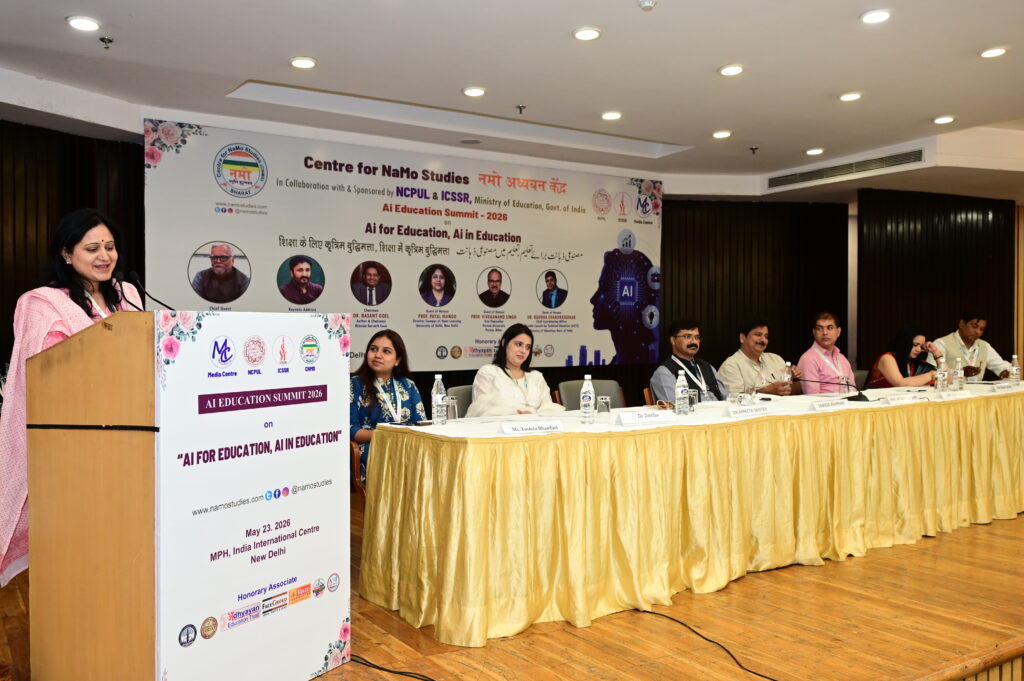
He emphasised that the Centre for NaMo Studies remains committed to encouraging intellectual dialogue, youth participation, policy discussions, and research-oriented initiatives that contribute towards the development of an informed, technologically advanced, and value-based society.
The technical session was moderated by Ms. Tushita Bhandari. The welcome address was delivered by Mr. Jawaid Rahmani, while the introductory remarks were presented by Dr. Deeba, Post Doctoral fellow of ICSSR, who highlighted the importance of academic dialogue on emerging technologies and their social impact.
