
Centennial Birth Celebration: Why Rahi Masoom Raza Still Matters – Prof. Jasim Mohammad
From Ghazipur to the Nation: The Timeless Legacy of Rahi Masoom Raza

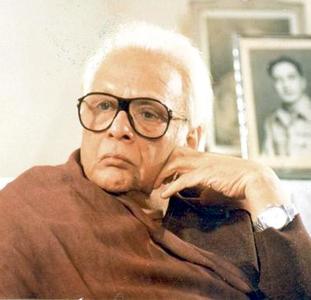
In the midst of preparing for the centennial birth celebration of Dr. Rahi Masoom Raza (1st Sept, 1927), it seems appropriate to take some time out to contemplate the work of an author whose contributions are not only to the Urdu and Hindi literature but belong to the collective literary tradition of India. No other writer comes to mind who has been able to influence so many different worlds equally well – poetry, novels, cinema, television and intellectual thought. But to limit the memory of Rahi only to his dialogues from Mahabharat or his novel ‘Aadha Gaon’ would amount to remembering just a small part of an amazing man’s legacy.
Like the many other Urdu poets who preceded him, Masoom Reza adopted the word “Rahi” as his takhallus, the poetic pen-name which would become an integral part of his persona. This name, which means “the traveller,” seems to encapsulate the travels made by this poet throughout his life. Whether linguistic, moving through both languages without leaving behind either one, literary, writing easily for both the literate reader as well as the movie-going public, or cultural, being aware of language and history in every aspect of his poetry, he was a true traveller. Even his pronunciation of his own last name was of importance to him. He pronounced it “Reza” rather than the common “Raza.”
Hailing from Gangauli village in the Ghazipur district, Rahi Masoom Reza was never carried away by his success or reputation to break off from the earth that had nurtured him all along. Gangauli was not only his birthplace but also the heart of his imagination till his last breath. The life of village, the majlis, marsiya, imambara, family relations, rivalries, festivals and changing social realities all became part of his literature. In fact, Gangauli became for Reza the setting of his entire literary world, which was highly local in its setting but universal in its themes. The lesson we learn from his writings is that the greatest truths about mankind are to be discovered in little villages and not big cities.
As someone from Ghazipur myself, I often feel that Rahi Masoom Raza is among the greatest cultural ambassadors our district has ever produced. When people across the country read Aadha Gaon or watched Mahabharat, they were unknowingly entering the world shaped by the soil, language, humour and emotions of our region. He carried Ghazipur in his heart wherever he went, and through his writings he carried Ghazipur to the world.
His education at Aligarh Muslim University refined his scholarship, but it never distanced him from ordinary people. He understood villages, families, friendships, caste realities, religious identities and everyday struggles because he had lived among them. His writing was never artificial or detached. It sounded like real conversations, real emotions and real life. That is perhaps why readers across generations continue to find themselves in his characters.
Of the numerous literary masterpieces authored by him, one of the most timeless ones is definitely Aadha Gaon. It is an extremely sensitive portrayal of Indian society, depicting the hopes, fears, conflicts, and unity of those people experiencing an unprecedented period of changes. Decades after its creation, this book sounds incredibly contemporary in the way it talks about people rather than politics.
An equally interesting novel by Rahi Masoom Raza was called Topi Shukla. This work was remarkable in its ability to challenge stereotypes and identity and in its courage and honesty. Rahi Masoom Raza never thought that literature should praise society; on the contrary, he believed that it should encourage society to look at itself honestly. The people he created were complex in their nature just like real people and he was not willing to divide all characters into heroes and villains.
The reason why Rahi Masoom Raza is absolutely unique is that he managed to combine literature and entertainment successfully. There are many excellent novelists whose books can be found only in the libraries while there are many successful screenwriters who are soon forgotten.
यह भी पढ़ें
His contribution to Indian cinema deserves equal admiration. Whether writing dialogues for Mili, Gol Maal, Karz, Main Tulsi Tere Aangan Ki, Tawaif or Lamhe, he gave characters a natural voice that audiences could instantly relate to. His dialogues were never loud for the sake of applause. They were simple, meaningful and emotionally authentic. That simplicity became his greatest strength.
For millions of Indians, however, Rahi Masoom Raza will always remain the writer behind B. R. Chopra’s Mahabharat television series. It required immense scholarship and literary sensitivity to present one of India’s greatest epics in a language that was dignified yet accessible. Every Sunday morning, families across the country gathered around television sets, often unaware that the words they admired were crafted by a son of Ghazipur. His work transformed a television serial into a shared national experience.
One of the most admirable qualities of Rahi Masoom Raza was his unwavering faith in India’s composite culture. He never accepted the idea that languages, religions or communities must exist in isolation. He celebrated Hindi and Urdu not as rivals but as sisters born from the same civilisation. His life itself demonstrated that literature has the power to unite where politics often divides.
His courage was equally remarkable. He did not hesitate to express uncomfortable truths or defend his convictions, even when doing so invited criticism. He believed that a writer’s responsibility was not to please everyone but to remain honest before history and before one’s own conscience. That moral courage gives his writings a rare dignity that continues to inspire readers.
Sadly, many young people today recognise his name because of Mahabharat but have not yet discovered the richness of his novels and poetry. His centenary should therefore become more than a ceremonial celebration. Schools, universities, literary organisations and cultural institutions should organise reading festivals, seminars, public lectures, theatrical adaptations and translation projects so that a new generation can engage with his remarkable body of work.
Ghazipur also bears a unique responsibility. A district that has contributed an author like Rahi Masoom Raza to the country ought to pay homage to him by celebrating his works. The district could host literary festivals, memorial lectures, libraries and scholarship programmes in the name of Rahi Masoom Raza. Apart from honouring the great man in all humility, such initiatives would go a long way in inspiring future generations of authors from small towns and villages like Ghazipur.
Being a resident of Ghazipur myself, I do not view Rahi Masoom Raza as just another historical figure. He stands out for me as a living testament to the power of literature based in one’s own region to reach out across the entire nation. His success reminds us of the fact that apart from being famous for our history, Ghazipur is also renowned for its literary contributions. It makes us feel proud of the fact that we come from a place where great intellects can flourish.
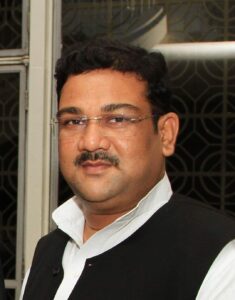
(Author is Chairman of Aligarh Literature Festival (A Trust). Email: alf@aligarhlitfest.in )
